
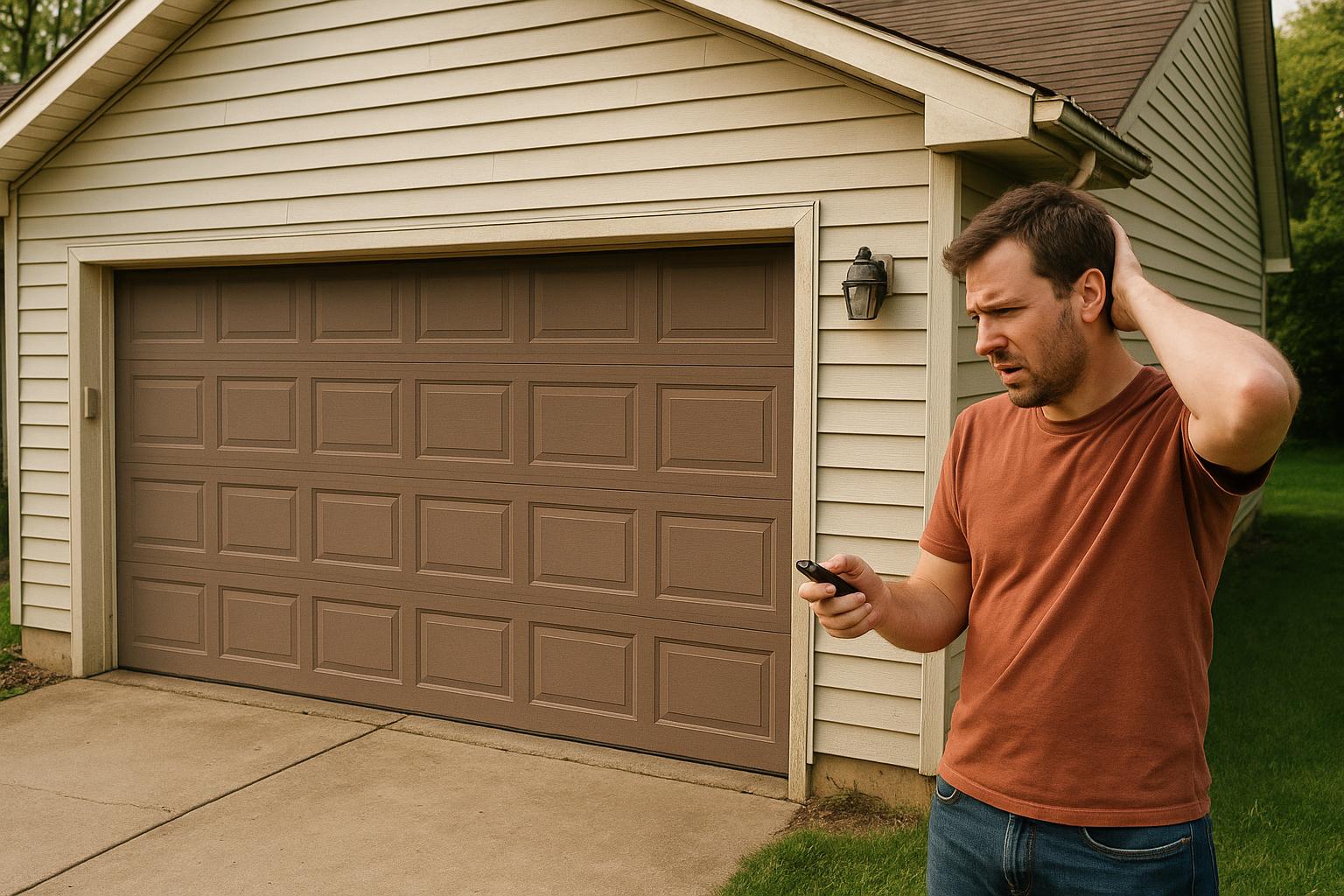
When Your Garage Door Stops Working, Don't Panic
Few things are more frustrating than pressing your garage door opener and getting no response. Whether you're stuck inside your garage trying to get to work or standing in your driveway unable to secure your home, a garage door that won't open or close is a problem that demands immediate attention.
For homeowners in Boaz and across Marshall County, this is one of the most common garage door issues we see — and the good news is that many causes are straightforward to diagnose. In this guide, we'll walk you through the most likely reasons your garage door has stopped cooperating and help you figure out what you can handle yourself versus when it's time to call in a professional.
Check the Obvious Things First
Before assuming the worst, start with the basics. You'd be surprised how often the fix is simpler than you think.
- Dead remote batteries: If your wall-mounted button works but your remote doesn't, replace the batteries in your remote or keypad. This is the single most common reason people think their garage door is broken.
- Power supply: Make sure your garage door opener is plugged in. Check the outlet by plugging in another device. If there's no power, look at your circuit breaker panel for a tripped breaker.
- The lock switch is engaged: Many garage door openers have a lock button on the wall-mounted control panel. If it's been accidentally activated, the remote won't work. Look for a small light or indicator near the lock button.
Inspect the Safety Sensors
Modern garage doors are equipped with photoelectric safety sensors — small devices mounted near the bottom of the door tracks on each side. These sensors send an invisible beam across the opening, and if anything breaks that beam, the door won't close. It's an important safety feature designed to prevent the door from closing on a person, pet, or object.
Here's what to check:
- Alignment: The sensors need to face each other directly. If one has been bumped or shifted, the beam won't connect. Look for a steady green light on both sensors. A blinking light usually means they're misaligned.
- Obstructions: Remove anything that might be blocking the sensor path — boxes, tools, cobwebs, or even leaves blown in by the wind.
- Dirty lenses: Wipe the sensor lenses with a soft cloth. Dust, dirt, and moisture can interfere with the beam.
- Wiring issues: Check that the wires running from the sensors to the opener unit haven't been damaged, disconnected, or chewed by pests.
If your garage door opens fine but refuses to close, misaligned or obstructed sensors are almost always the culprit.
Look at the Tracks and Rollers
Your garage door travels along metal tracks on both sides. If those tracks are bent, dented, or obstructed, the door can get stuck partway or refuse to move at all.
Visually inspect the tracks from top to bottom. Look for:
- Visible dents or bends in the track
- Debris, dirt, or small objects lodged in the track
- Rollers that have come out of the track or appear worn and cracked
- Loose brackets holding the track to the wall
You can carefully remove debris from the tracks yourself, but bent tracks and broken rollers should be handled by a trained technician. Attempting to force a door along a damaged track can cause further damage to the door panels and the opener mechanism.
Listen for Clues from the Opener
When you press the button, pay attention to what happens — or doesn't happen. The sounds your opener makes (or the lack of them) can tell you a lot about the problem.
The motor runs but the door doesn't move
This usually means the drive mechanism has failed. In chain-drive and belt-drive openers, the chain or belt may have broken or slipped off the sprocket. In screw-drive openers, the carriage may have disengaged.
You hear a humming sound but nothing happens
The motor is trying to run but can't. This could indicate a stripped gear inside the opener, a jammed door, or a problem with the springs that's making the door too heavy for the opener to lift.
There's a clicking sound but no motor engagement
This often points to a faulty circuit board or capacitor inside the opener unit. These are electrical components that wear out over time and typically require professional replacement.
Complete silence
If there's no sound at all from any control — remote, wall button, or keypad — the issue is likely electrical. Check the power supply, and if that's fine, the opener's internal wiring or logic board may have failed.
The Emergency Release: Your Manual Override
Every garage door opener has an emergency release cord, usually a red handle hanging from the opener track near the motor. Pulling this cord disconnects the door from the opener, allowing you to lift and lower the door manually.
This is essential to know in situations where:
- You need to get your car out during a power outage
- The opener has failed and you need to secure your home
- A technician needs to access the door for repairs
Important safety note: If you suspect your springs are broken, do not attempt to open the door manually. Without functioning springs, a garage door can weigh 150 to 300 pounds or more. Trying to lift it could result in serious injury. Call a professional instead.
When DIY Troubleshooting Isn't Enough
Some garage door problems are safe and simple to address on your own. Replacing remote batteries, clearing sensor obstructions, and using the emergency release are all things most homeowners can handle confidently.
However, there are situations where calling a professional is the smart and safe choice:
- Broken springs or cables: These components are under extreme tension and can cause severe injury if handled improperly.
- Damaged tracks or panels: Structural issues with the door or track system require specialized tools and expertise.
- Electrical problems with the opener: Faulty wiring, burned-out circuit boards, and motor failures involve risks that go beyond basic troubleshooting.
- The door is off its tracks: A door that has come off the tracks is unstable and potentially dangerous. Do not try to force it back into place.
Get Your Garage Door Working Again
A garage door that won't open or close is more than an inconvenience — it's a security risk and a disruption to your daily routine. While some fixes are quick and easy, others require the knowledge and tools that only a trained technician can provide.
At Boaz Garage Door Specialists, we help homeowners throughout Boaz, Albertville, Guntersville, Arab, and the surrounding communities get their garage doors back on track — often the same day. Whether you've tried troubleshooting on your own and hit a wall, or you'd rather have a professional diagnose the issue from the start, we're here to help with honest pricing and no surprises.
If your garage door has stopped working and you're not sure what's wrong, give us a call. We'll figure it out and get it fixed right.