
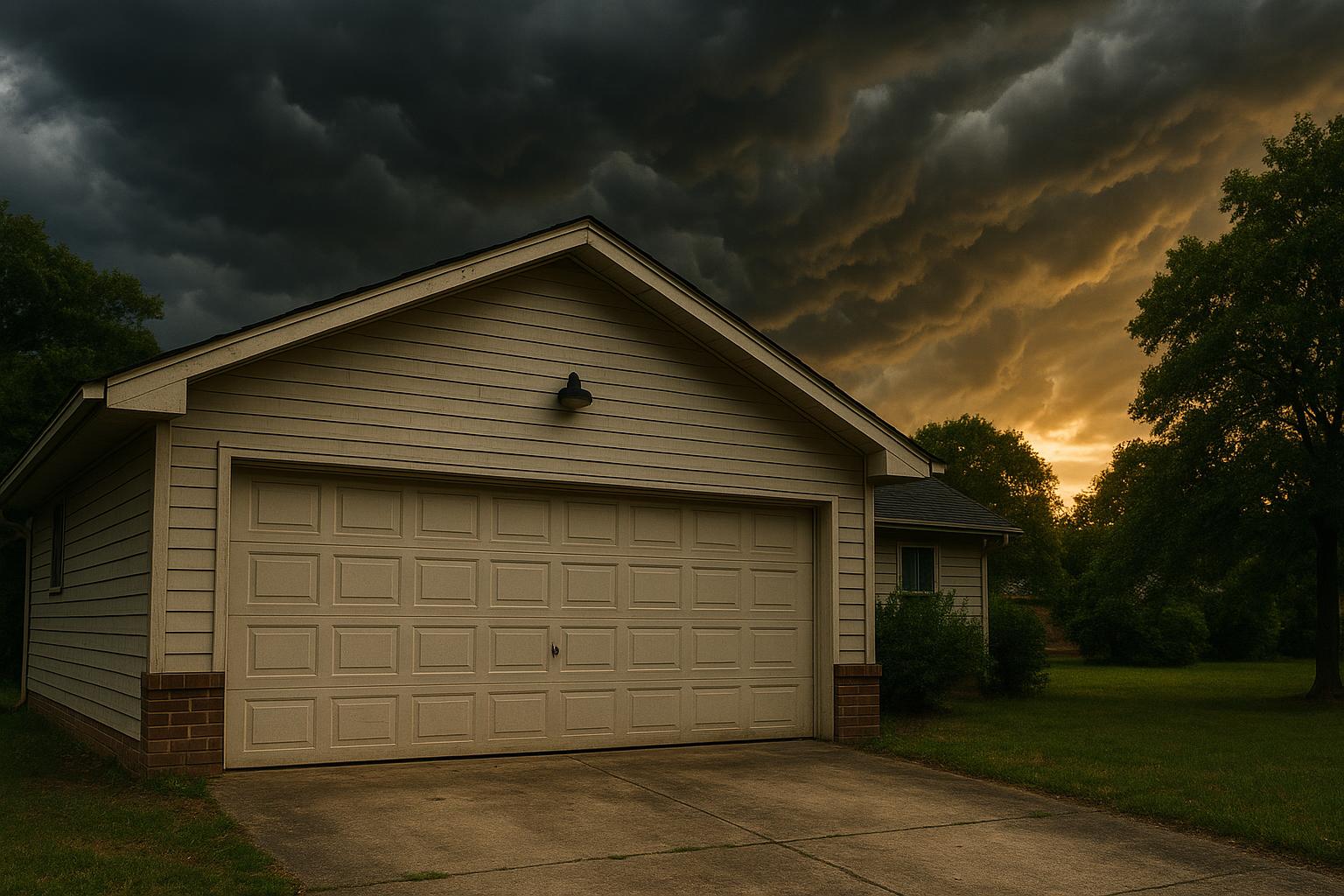
Your Garage Door Faces Every Storm, Heat Wave, and Cold Snap
If you live in Boaz or anywhere in Marshall County, you know our weather doesn't stay the same for long. We can go from a mild 60-degree morning to a severe thunderstorm warning by afternoon, and our summers bring the kind of heat and humidity that wears down just about everything — including your garage door.
Most homeowners don't think about how weather affects their garage door until something goes wrong. But temperature swings, moisture, wind, and even UV exposure can cause real damage over time. Understanding these effects can help you stay ahead of costly repairs and keep your garage door working smoothly all year long.
How Summer Heat and Humidity Impact Your Garage Door
Summers in Boaz regularly push into the 90s, and the humidity can make it feel even hotter. That combination creates several problems for garage doors:
- Metal expansion: Steel and aluminum garage door panels expand in extreme heat. This can cause the door to fit more tightly in its frame, leading to sticking, binding, or difficulty opening and closing smoothly.
- Warping on wooden doors: If you have a wooden garage door, high humidity can cause the wood to swell and warp. Over time, this leads to gaps, misalignment, and difficulty sealing the door properly.
- Weatherstripping deterioration: The rubber weatherstripping along the bottom and sides of your garage door breaks down faster in intense heat. When it cracks or hardens, it stops keeping out moisture, pests, and debris.
- Opener strain: When heat causes the door to bind or stick, your garage door opener has to work harder. This extra strain can shorten the life of the motor and lead to premature failure.
During the hottest months, it's a good idea to lubricate your door's moving parts more frequently and inspect the weatherstripping for signs of cracking or shrinkage.
Winter Cold and Temperature Swings
While North Alabama doesn't see the extreme cold that states further north experience, our winter temperatures regularly dip into the 20s and 30s. More importantly, we often see dramatic temperature swings — a 40-degree difference between daytime and nighttime isn't unusual.
Here's how cold weather affects your garage door:
- Metal contraction: Just as metal expands in the heat, it contracts in the cold. This can cause gaps between panels and along the edges of the door, letting in cold drafts and moisture.
- Hardened lubricant: The grease and lubricant on your springs, rollers, and hinges can thicken or harden in cold temperatures, making the door sluggish and noisy.
- Spring stress: Garage door springs are under tremendous tension, and cold temperatures make the metal more brittle. Springs are more likely to snap during a cold morning than at any other time of year.
- Concrete shifts: Freeze-thaw cycles can cause your garage floor and the concrete around the door frame to shift slightly. Even small shifts can throw your door out of alignment.
If your garage door feels heavier or slower to open on cold mornings, don't ignore it. That's often a sign that the springs or lubricant need attention before a bigger problem develops.
Severe Storms and High Winds
Marshall County sits in an area that sees its fair share of severe weather, from powerful thunderstorms to the occasional tornado threat. High winds put enormous pressure on garage doors, especially older models that weren't designed to withstand extreme forces.
A standard two-car garage door presents a large, flat surface area that acts almost like a sail in strong winds. If the door is blown in or pushed off its tracks, it can compromise the structural integrity of your entire home by allowing wind to enter and pressurize the interior.
What You Can Do
- Inspect your door after every major storm. Look for dents, bent tracks, loose hardware, and gaps along the edges.
- Consider a wind-rated door. If you're due for a replacement, ask about garage doors rated for high-wind zones. These doors are reinforced with additional bracing and heavier-gauge steel.
- Check the tracks and rollers. Even moderate storms can knock rollers out of alignment or bend tracks slightly — enough to cause problems the next time you open the door.
Rain and Moisture Damage
Boaz gets an average of about 55 inches of rain per year, which is well above the national average. All that moisture can cause problems that build up gradually:
- Rust and corrosion: Steel springs, hinges, and tracks are all vulnerable to rust, especially if the protective coating has worn away. Rust weakens these components and can lead to failure.
- Water intrusion: If your weatherstripping is worn or your door doesn't seal properly, rainwater can seep into your garage. Over time, this leads to mold, mildew, and damage to anything you store inside.
- Electrical issues: Moisture can affect your garage door opener's wiring and sensors. If your opener starts behaving erratically after heavy rain, moisture may be the culprit.
Keeping your garage door properly sealed and maintaining the hardware with rust-resistant lubricant goes a long way toward preventing moisture-related damage.
UV Exposure and Your Door's Appearance
It's easy to overlook, but years of direct sunlight take a toll on your garage door's finish. Paint fades, vinyl can become brittle, and the overall curb appeal of your home suffers. If your garage door faces south or west, it's getting the most intense UV exposure throughout the day.
Periodically washing your garage door and applying a UV-protective coating or fresh paint can help preserve its appearance. If the surface has become chalky, cracked, or severely faded, it may be time to consider a replacement that uses more UV-resistant materials.
A Seasonal Maintenance Checklist for Boaz Homeowners
The best way to protect your garage door from North Alabama's weather is with regular seasonal maintenance. Here's a simple schedule to follow:
Spring
- Inspect and replace damaged weatherstripping
- Clean and lubricate all moving parts
- Test the door's balance and alignment
- Check for winter damage to springs and cables
Summer
- Reapply lubricant if the door is sticking
- Inspect the opener for signs of overheating or strain
- Check for pest entry points along the door seal
Fall
- Prepare weatherstripping for colder temperatures
- Inspect and tighten all hardware
- Test the auto-reverse safety feature
Winter
- Use a cold-weather lubricant on springs and rollers
- Monitor the door for sluggish operation on cold mornings
- Clear debris from the tracks and bottom seal
When to Call a Professional
Some weather-related garage door issues are easy to handle on your own — cleaning, lubricating, and visual inspections are all things any homeowner can do. But if you notice bent tracks, broken springs, a door that's off its rails, or an opener that's failing, it's time to call in a professional.
At Boaz Garage Door Specialists, we help homeowners and businesses across Boaz, Albertville, Guntersville, Arab, and the surrounding area keep their garage doors in top shape no matter what the weather throws at them. Whether you need a quick repair after a storm or want to schedule seasonal maintenance, we're here to help with honest pricing and fast service.
Don't wait for the next big storm or cold snap to find out your garage door has a problem. Give us a call today and let us make sure your door is ready for whatever North Alabama weather has in store.